Royal Standard Court Building Safety
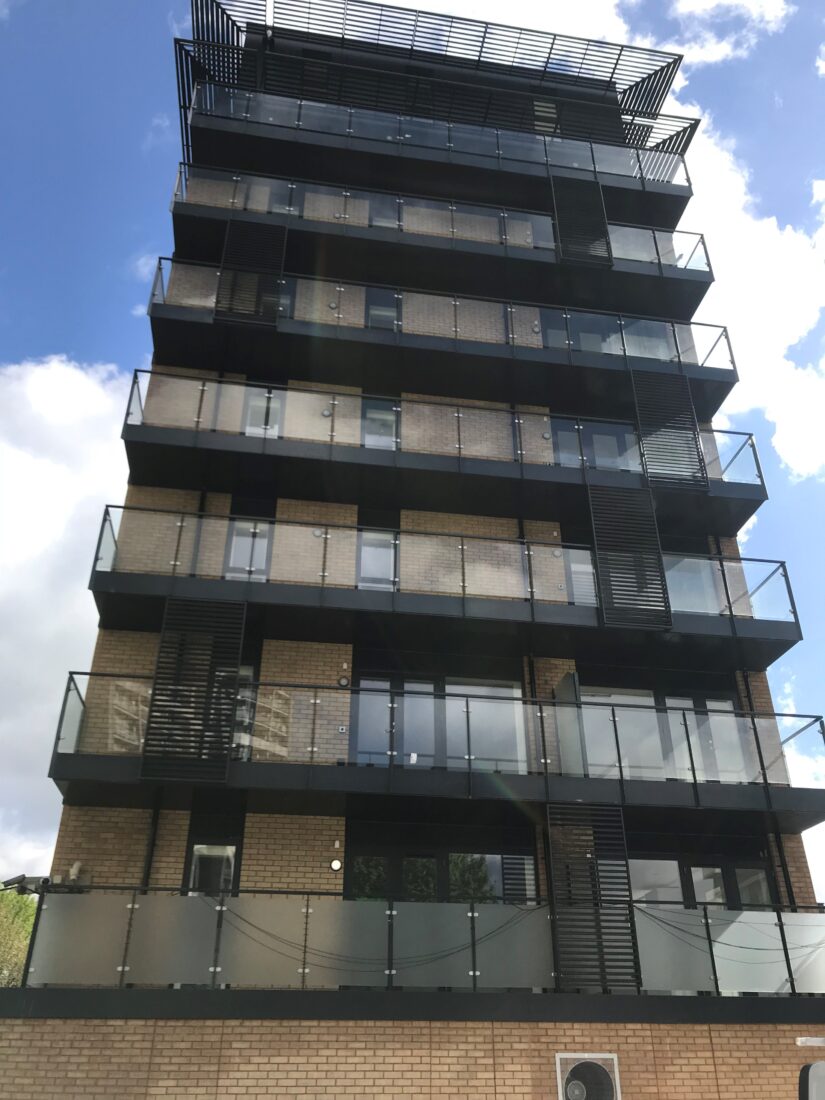
The information on this page is for residents of Royal Standard Court and focuses on the building and fire safety aspects of the block.
Under the Building Safety Act we need to deliver a continuous preventative and proactive approach to managing a building such as Royal Standard Court This involves identifying, assessing, removing, reducing and managing building safety risks. The Fire Safety Act also places on us further responsibilities in relation to fire risk.
Following a survey of residents on building safety, we have provided the information asked for in the sections below.
There are currently no building safety works planned for Royal Standard Court.
Information on Royal Standard Court
Royal Standard Court is at 226 Hillingdon Street, London SE17 3JD.
It is an 8-storey purpose-built block of 20 flats. The secure front door leads to an entrance hallway with a lobby door to Flat 1 and a further secure door into the main part of the building. Here there is access to the electrical cupboard, riser cupboards, the lift and the staircase to the upper floors. A bin store, cycle store and gas meter cupboard are located at ground level with external access possible.
The flats are in protected lobbies from the stairwell at each level. A dry riser and Automated Opening Vents (AOVs) are provided.
It was built under the Building Regulations of 2010 and is constructed using a steel frame. The external face has cladding on it and the building has a flat roof.
| Number of floors | 8 |
| Number of flats | 20 |
| Type of housing | General needs |
| Employees on site | None |
| Number of lifts | 1 |
| Number of stairs | 1 |
| Number of exits | 1 |
| Evacuation strategy | Stay put policy |
Evacuation policy
If a fire takes hold in the block but is not in your flat, then under a ‘stay put policy’, the advice is to stay inside your flat with the doors and the windows closed. If a fire is in your flat or in common areas, you are advised to evacuate and call the fire and rescue services.
You are not legally obliged to stay put if you wish to leave if there is a fire.
Buildings built with concrete, fire doors, fire compartmentation and other fire protection can create a protective barrier against fire and keep residents safe by staying in their flats. Using a ‘stay put’ policy also allows firefighters to do their job quickly, easily and safely.
Inspection schedule
Below is a schedule for inspections of building safety items in your block.
| Inspection | Frequency | Carried out by |
| Flat front doors | Yearly | Frankhams |
| Communal doors | Yearly | Frankhams |
| Wayfinding signage | Monthly | Wandle |
| Dry risers | Monthly | Wandle |
| Fire alarm operational with no faults | Monthly | Wandle |
| AOV doors closed on each floor and operational | Monthly | Wandle |
| No smoking signs on each floor | Monthly | Wandle |
| Lifts operational | Monthly | Wandle |
| Combustible items in the intake cupboards | Monthly | Wandle |
| PIB box onsite | Monthly | Wandle |
| Fire stopping in the communal areas | Monthly | Wandle |
| Non technical checks for key fire systems | Monthly | Sureserve |
| Dry riser servicing | Biannually | Sureserve |
| 3hr duration test to emergency lighting | Annually | Sureserve |
| Function test of emergency lighting | Monthly | Sureserve |
| Service of fire detection and alarm systems | Biannually | Sureserve |
| Test of lightning protection system | Annually (11 month) | Sureserve |
The latest External Wall Safety Survey (EWS)
The latest Fire Risk Assessment
Example building safety survey results
These are examples of regular inspections that are carried out.
The resident engagement plan
You can download a copy of the Royal Standard Court resident building safety engagement plan here:
Fire and building safety measures in the block
Your building has fire doors. They are there to prevent fire spreading from one area of your building to another. Fire doors are important and to be effective they need to be well maintained and not changed in any way.
We ask that you:
- Keep your front door closed when you are not using it, and never wedge it open in any way.
- Tell us as soon as possible if a fire door is damaged
- You must never replace or change a fire door. This includes not removing or adjusting the door closures, changing the letterbox, screwing or nailing anything onto the door or repairing or changing the locks.
For our part, we will:
- Maintain and repair all fire doors.
- Inspect fire doors, including your front door, at least once a year. We have a legal responsibility to inspect your front door. To do this we will need you to let us you’re your home so we can check it is working correctly. This helps keep you, your family and your neighbours safe if there is a fire.
- Carry out [monthly] checks on firefighting and safety equipment to make sure it is all working properly. These checks cover:
- lifts
- dry risers (these are empty pipes the fire service can connect to from outside to pump water to where it is needed to put out a fire)
- the smoke control system
- fire detection and alarm systems within the communal areas
- any automatic doors that are linked to the fire alarm.
You can ask to see records of these checks.
You can see the detailed fire safety strategy for your block here.
Building safety advice
You can find advice on the following areas by clicking the links below:
Fire safety advice
Most fires in the home start by accident. By carrying out a few simple safety checks you can reduce the chances of a fire starting in your home and keep your family safe.
Don’t forget, if there is a fire in your home – get out, stay out and call 999 – don’t try to tackle the fire yourself.
Things you should do:
- Make sure you know where the fire escape routes are from your home and building.
- If you see an object blocking any of the fire escapes, please move it if it is safe to do so or report it to us.
- Close inside doors at night to stop a fire from spreading.
- Never store items in communal (shared) areas such as corridors and balconies.
- Make it a habit to keep the exits from your home clear, so that people can escape if there is a fire.
- Check all your smoke alarms work. You are twice as likely to die in a fire if your smoke alarm does not work. Your local fire service provides free home safety checks and in many cases this may include fitting a free smoke alarm. Fire Officers will also advise you about making your home safer. To get a free safety visit from your local fire service, contact the London Fire Brigade on 08000 28 44 28.
- Turn off and unplug all electrical appliances unless they are designed to be left on, like a freezer.
- Do not leave the washing machine on as that can potentially start a fire.
- Check your cooker is off. Gas cookers are harder to notice so double check.
- Turn heaters off and put up fireguards too if you have them.
- Put candles, naked flames and cigarettes out properly. It is much safer to smoke outside and ensure they are put out properly in an ashtray. Make sure candles or naked flames are secured in a proper holder and away from materials that may catch fire – like curtains.
- Follow e-scooter safety advice, use the correct charger/battery and never charge next to your front door or when you are asleep.
- Remember to turn off those Christmas lights!
- Make sure that everyone in your home can easily find the keys for doors and windows – always keep them in the same place.
- Keep mirrors and other reflective materials like glass and crystal away from sunny windows as the reflection can start a blaze.
Fire doors
We check flat entrance doors and communal doors routinely to ensure compliance with safety regulations.
- Never leave fire doors wedged open, they need to remain closed.
- Do not tamper with self-closing devices on fire doors.
- Please report any faults or damage to fire doors immediately.
You can read more about fire door safety here.
Keeping your balcony safe:
- Never barbecue on your balcony, sparks can fall to the homes below.
- Don’t keep paints, paint thinners or fuel on your balcony.
- If smoking on your balcony, dispose of smoking materials responsibly and do not flick lit cigarettes from a balcony. Use safety ash trays to extinguish cigarettes.
How can I best keep fire safe?
You can best keep fire safe by:
- giving our staff and contractors access so that they can carry-out fire related maintenance and undertake fire risk assessments.
- looking after doors and windows on escape routes so they can be easily and quickly opened in case of a fire. This includes keeping doors closed (unless they are doors designed to be held open on magnetic devices) and not wedging them open.
- not changing your flat’s front door, as this acts as a key line of defence in preventing the spread of fire.
- not smoking in communal areas and generally taking care when smoking.
- keeping escape routes and communal areas clear by not storing belongings in communal areas and in particular keeping stairwells free of obstacles. This will ensure people can get out of the building quickly.
- familiarise yourself with the escape plan for your building. If you are not sure of this, please contact us.
For more fire safety advice, visit the London Fire Brigade website at www.london-fire.gov.uk
If you discover a fire:
- raise the alarm
- leave the building immediately by the nearest available exit if it is safe to do so
- move to a safe distance away from the building
- phone the Fire Brigade by dialling 999 or 112
- remain a safe distance away from the building and await the Fire Brigade.
If the fire is in your home:
- tell everyone in your home and get them to leave the building closing your front door behind you
- move to a safe distance away from the building
- call the Fire Brigade by dialling 999 or 112 asking for FIRE
- remain a safe distance away from the building and await the Fire Brigade
- if you see or hear of a fire in another part of the building stay put in your home as this will usually be the safest option unless you are directly affected by the fire. Close all windows and be prepared to leave
- phone the Fire Brigade by dialling 999 or 112 and asking for FIRE
- you must leave the building immediately if smoke or fire directly affects your home or you are directed to do so by the Fire Brigade. Close your front door behind you
- move to a safe distance away from the building, remain there and await the Fire Brigade.
Remember:
- Do not take risks.
- Do no stop to collect personal belongings.
- Do not return to the building for any reason unless authorised to do so.
- Do not use any lift.
Fire safety in communal areas
A communal area is any shared area in your building, outside of your flat.
- You must not smoke in any of the communal areas in or around your building.
- All communal areas must be kept clear.
- You must not store or charge mobility scooters, e-bikes, e-scooters in communal areas some have batteries that can cause serious fires. If you charge a scooter or bike in your home, do not leave it unattended or overnight.
Who is responsible
Wandle is responsible for your building and the Responsible Person is our Building Safety & Compliance Lead.
We also have a Fire & Building Safety Officer (who is the key contact for building safety), a Senior Compliance Officer (the lead for fire safety including fire risk assessment and fire safety works), a Building Compliance Officer (the lead for keeping fire systems operating safely) and a Building Compliance Support and Engagement Officer (the key contact for letting you know what is going on in your building).
Building safety concerns
If you have any concerns about building safety in your block, please contact us as soon as possible using the email address compliance@wandle.com
Building safety complaints process
To ensure a consistency of approach, complaints about building safety should be raised through our usual complaints process by emailing customerservices@wandle.com. We have made sure that building safety related complaints are directed to the Building Safety & Property Compliance Team for action so they go straight to the people who are responsible.